Things That Matter
Dangers of Founder Worship in Silicon Valley
I remember really vividly the first time I was in SF — I had come up to the city for a concert at America’s Cup Pavilion with some of my friends, who were also interning with me at Apple.
I remember being mesmerized by the lights on the Bay Bridge at night and the promise of the place. My friend had ordered a car for me (from a phone!) from an app called Sidecar (a predecessor to Uber). I remember naively asking the driver if he took cash and he said no, it was already paid for through the app. I felt like I had arrived at the future! This was it. Tech mecca of the world. The center of innovation and technology, birthplace of pioneers and unicorns.
—
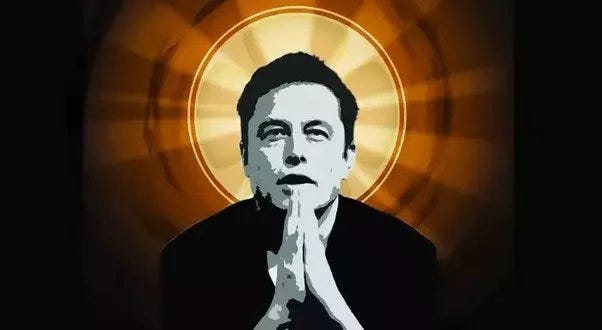
The dark underbelly of this culture is that it has raised an entire generation of young people who suffer from “Founder Worship”. They read Elon Musk’s biography and are simultaneously in awe of the empires he has built and narcissistically wondering why they aren’t Elon Musk yet at 22. They have been brainwashed erroneously into believing that starting your own company is the only way to “fulfill your true passion in life”.
I don’t know how many times I’ve heard this — working in finance referred to as “selling out,” great jobs at Google and Facebook referred to as temporary pitstops “so I can find co-founders to build my startup.” Foundational to all of these is the idea that working for someone else somehow makes you not true to yourself or less of a person.
These are really dangerous ideas.
First, because very few people in the U.S. and in the world become CEOs and not everyone should be / should want to be. The belief that somehow being a CEO make you any better than anyone else…it doesn’t. It’s also a really stressful job that comes with a lot of sacrifices. Young people know this abstractly but they think that, at 22, they for sure can handle it. People spent years and years learning how to manage people, run good technical orgs and they still sometimes aren’t successful CEOs after all of that. Becoming someone that other people respect and trust with their livelihoods takes a lifetime of work and isn’t something you can build overnight.
Second, Founder Worship is dangerous because it is encouraging a lot of young people to eschew conventional paths and jobs where they would get really important early career training to unnecessarily take the risk of venturing out on their own.
Venturing out as a young person is really risky — you don’t know a lot and you’re probably realistically not the best person to build any given business…not because you aren’t really smart or capable or hardworking but mostly because you don’t have the experience you need or the connections you need to understand a space, sell into it and be taken seriously. Nor have you built up the technical or managerial chops to run an effective team to accomplish a goal. Young people are trying to run before they have learned how to walk in many situations because they feel pressured to achieve extraordinary outcomes early on in their careers. They are egged on by the promise of the rare outcomes achieved by a handful of individuals who beat the odds. Worst of all, the can-do mentality of Silicon Valley leaves them feeling like it’s their fault if they aren’t Zuckerberg. In a world where everything is fair/meritocratic, the only person to blame for your failures is yourself. Young people end up feeling mediocre /total failures to have not achieved extraordinary outcomes at a young age because the bar has gotten stretched so high by a couple individuals and everyone is telling them it could have been them.
Third, it breeds arrogance and hopelessness. I know at first glance those seem pretty contradictory but bear with me.
Arrogance:
- Young people lack patience to work hard at tasks others assign them, especially tasks that are hard or time-consuming or they consider “beneath them,” because they think are destined to be Founders.
- Young people want to venture out on their own after they have done two tech internships because they think they understand how to build a functional tech stack that scales and Fortune 500 companies don’t know what ML is.
- Young people think tech is the solution to all problems.
Hopelessness:
- Young people constantly compare themselves to what Mark Zuckerberg did at age X or Evan Spiegel did at age Y and feel terrible about their life accomplishments.
- Young people see their friends go through Y Combinator, get Thiel Fellowships, raise money and are jealous / sad / anxious that they aren’t there yet.
- Young people feel hopeless because they haven’t found their One True Passion (OTP) at 22 that leads them to build a startup like Airbnb.
Ultimately, to the young people of Silicon Valley: it is admirable to want to create and to be motivated enough to want to build something of lasting and sustainable value to humanity. If you are building something, more power to you. Make sure you are working with experienced people who know their stuff and I’d love to hear all about it. If not, constant anxiety to succeed and rushing through things is dangerous. Build a strong foundation, learn as much as you can, take your time, stop feeling like a failure and being in such a rush to do everything. There is nothing wrong with waiting until later in your life to start a company. You will have the connections you need to sell effectively and raise money; you will have experiences you need to build and scale effective tech organizations; all of these will give you a higher chance of success.
Finally, there is also nothing wrong with never starting your own thing or never find your One True Passion. Most “One True Passions” founder stories are created retrospectively as a way of people to rationalize and make sense of their life stories and paths in a way that is coherent.
— I wrote this over 5 years ago but still stand by these thoughts, even after starting a YC-backed startup. Coming soon: a post on the dangers of hustle culture.